
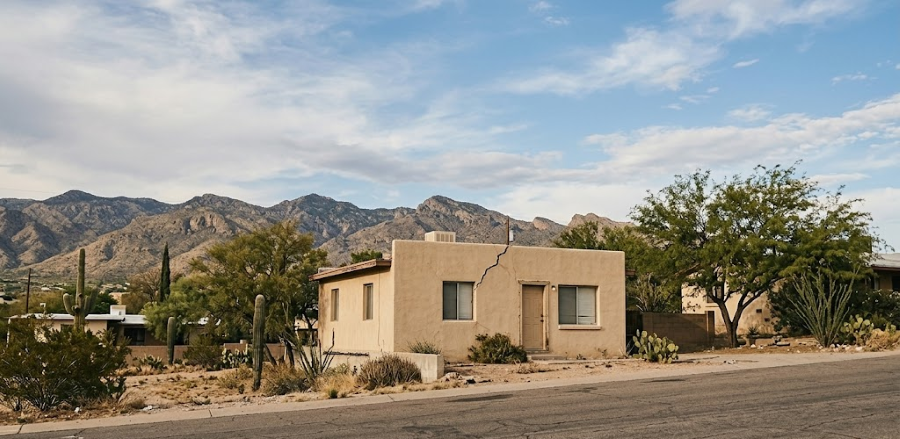
When Should You Worry About Wall Cracks in Arizona?
Most wall cracks are not immediate structural emergencies, but they can signal deep structural movement depending on their size, location, and whether they are actively expanding. In Tucson homes, cracks often stem from benign seasonal settling, but they can also serve as an early warning sign of underlying foundation failure.
If you have recently noticed a new fissure splitting across your drywall or exterior stucco, your first instinct is likely to worry about your home’s stability. Because Southern Arizona landscapes expose residential structures to extreme heat and volatile moisture shifts, tracking the physical characteristics of a crack is vital to figuring out if you need an expert’s opinion.
👉 Read the Parent Hub: Structural Warning Signs in Tucson Homes
Types of Wall Cracks to Watch For
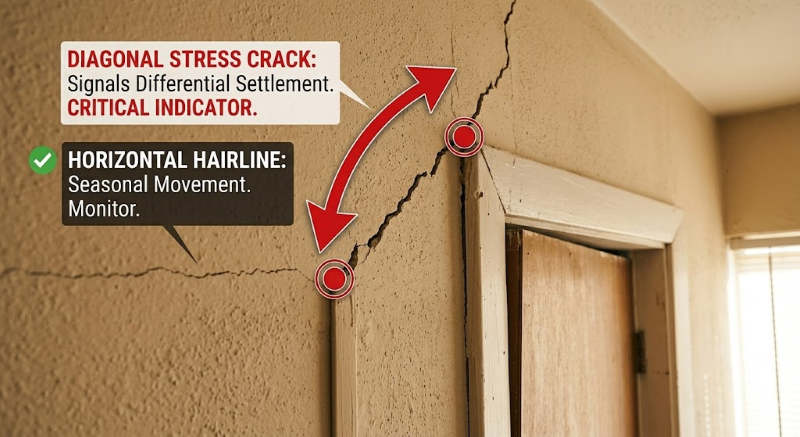
Not all fissures are created equal. Understanding the direction and shape of the damage helps identify the type of stress your property is experiencing:
- Hairline Cracks — These thin, surface-level separations are typically minor cosmetic flaws resulting from normal paint aging or drywall seam drying.
- Vertical Cracks — Running straight up and down, these fissures are frequently caused by normal concrete shrinkage or standard, uniform home settling.
- Diagonal Cracks — Spanning at a 45-degree angle, diagonal lines indicate differential settlement (one corner of the home dropping faster than the rest) and should be monitored closely.
- Horizontal Cracks — Running sideways along block walls or foundations, horizontal splits are serious indicators of severe lateral soil pressure and structural damage.
👉 Learn More: Foundation Wall Cracks Guide
When to Take Wall Cracks Seriously
You can manage minor drywall imperfections yourself, but you must act quickly if you notice a dangerous combination of escalating physical symptoms. Pay close attention to your home’s structural lines if:
- The crack is visibly getting wider, longer, or deeper over a period of weeks.
- The gap width exceeds 1/8 of an inch, allowing light or moisture to pass through.
- Multiple cracks are forming simultaneously in the same localized area of the building.
- Secondary symptoms are present, such as doors sticking in their frames, sloping floors, or windows jam-locking shut.
If more than one of these warning signs applies to your property, do not ignore the situation. Shifting clay soil will continue to stress your framework until the root cause is stabilized.
Still Unsure? Get a Free, Unbiased Second Opinion
If you are still anxious about the changes in your walls, don’t guess, and don’t let a commission-driven repair contractor pressure you into unneeded fixes. Send your photos and a brief description to receive an honest assessment, or check local field slots to secure a free baseline analysis.
👉 Request Help — Free & Unbiased
or