
Are Foundation Cracks Normal in Tucson?
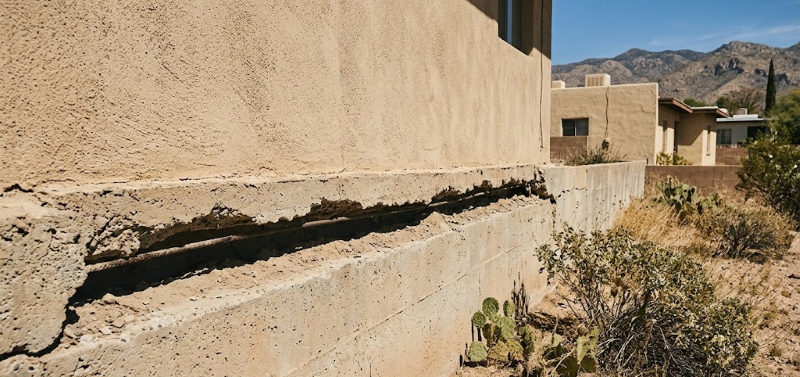
Most structural warning signs in Tucson homes are not emergencies — but some require quick action. If a crack or shift appeared suddenly, is actively widening, or is happening alongside other issues like sticking doors, it needs to be evaluated by a professional.
Most homeowners land here because something has recently changed inside their house. You might have stopped and wondered if you’re looking at basic cosmetic settling or an expensive structural red flag after noticing a new wall fissure, a sloping floor, or a door that suddenly refuses to latch properly.
While many home changes are completely benign and caused by Arizona’s arid climate, certain types of movement point to shifting soil that should be evaluated sooner rather than later. This guide is built to help you understand exactly what you’re seeing, find resources for your specific situation, and decide on a smart next step without pressure or sales gimmicks.
Not sure what you’re seeing?
Send your details and photos to get clear next steps from someone who understands the unique builds of Tucson homes. No high-pressure sales pitches, just honest information from an unbiased perspective.
Start with what you’re seeing
Choose the closest visual match to your home’s symptoms. Each dedicated page covers specific causes, severity levels, and what to do next:
- Foundation Wall Cracks in Tucson Homes — Learn which types of cracks are serious versus normal cosmetic settling.
- Horizontal Foundation Cracks in Tucson Homes — Why horizontal cracks indicate lateral pressure and are often urgent.
- Sloping Floors in Tucson Homes — What causes uneven flooring and when it signals true foundation movement.
- Sticking Doors and Windows in Tucson Homes — How to tell seasonal humidity issues from structural framing shifts.
- Gaps Between Walls and Ceilings in Tucson Homes — How to identify normal drywall expansion vs. structural separation.
- Roof Sagging or Dipping in Tucson Homes — When a dipping roofline indicates truss issues or structural load failure.
- What Causes Foundation Problems in Tucson Homes — A deep dive into the soil, moisture, and climate factors unique to Southern Arizona.
Why Tucson homes are different
Tucson’s desert climate creates unique structural risks that caught-off-guard homeowners rarely understand until major damage occurs. Foundations that have been perfectly stable for years can shift rapidly due to several environmental culprits:
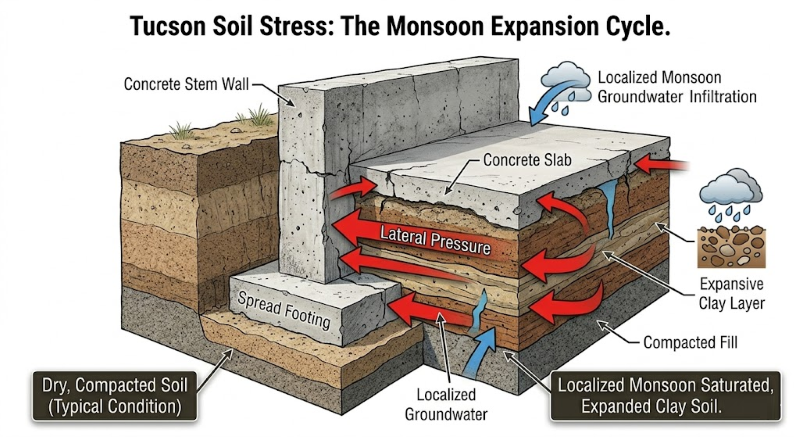
- Expansive clay soils — Large regions of the Tucson basin feature heavy clay soils that swell aggressively when wet and shrink drastically during dry spells, putting immense stress on concrete slabs.
- Monsoon season — Torrential downpours following months of drought cause rapid, uneven soil expansion. This violent shift is the primary trigger for sudden residential foundation movement.
- Extreme temperature swings — Dramatic daily and seasonal temperature fluctuations cause construction materials to expand and contract constantly, resulting in cracks over time.
- Aging slab foundations — Many local neighborhoods built between the 1960s and 1980s feature unreinforced concrete slabs that are reaching the end of their flexibility under these harsh conditions.

Understanding these distinct local factors will help you properly evaluate what is happening inside your home and determine whether you should continue monitoring the issue or bring in an expert immediately.
👉 Read: What Causes Foundation Problems in Tucson Homes
When to take it seriously
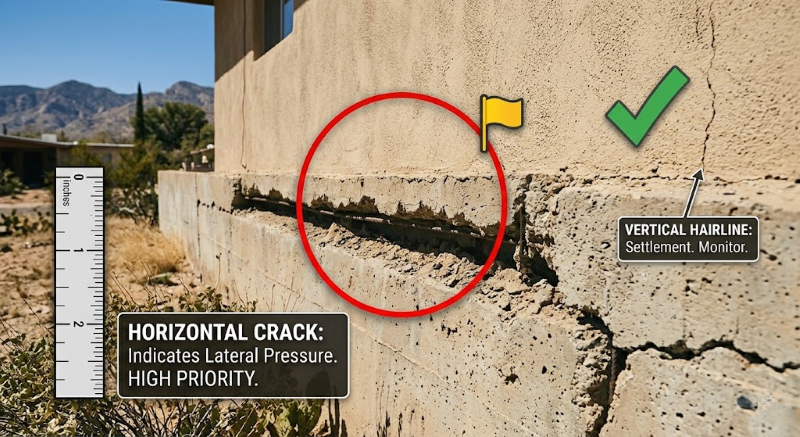
Not every hairline crack is a financial nightmare. However, particular combinations of physical symptoms indicate that you should act quickly to prevent further structural damage to your property.
Take it seriously if you notice:
- Cracks that are visibly widening or lengthening over a span of weeks.
- Issues that appear immediately following monsoon rains or long dry periods.
- Multiple symptoms (like a wall crack and a stuck window) occurring in the same corner of the home.
- Moisture pooling, water staining, or white powdery efflorescence forming near concrete cracks.
- Horizontal cracks running along block or concrete foundation walls.
- Stair-step cracking cutting through exterior brick or stucco masonry.

If your home exhibits more than one of these signs, don’t wait out another season. Securing a professional, unbiased opinion before calling a repair contractor will save you money and put you in a position to make an educated choice.
👉 Request Help — Free, No Obligation
Check availability for a free foundation inspection
If you have spotted active signs of home movement and want to understand the exact scope of the issue before spending money out of pocket, click below to see available slots:
👉 Check availability for a free foundation inspection in Tucson
What we do — and what we don’t
We are completely independent. We are not construction contractors, and we do not sell repair services, paid inspections, or foundation hardware. AZ Structural Check was launched to give local homeowners clear, honest, and completely unbiased diagnostics.
Our mission is to help you fully comprehend what is happening to your house so you can plan your next moves safely, avoiding the high-pressure sales scripts used by commission-driven repair companies. We point you toward the right certified professionals only when your home genuinely requires it.
Frequently asked questions
Are cracks in my Tucson home’s foundation always serious?
Not always. Hairline vertical cracks stemming from normal concrete curing and basic settling are incredibly common and usually purely cosmetic. The red flags you need to watch for are horizontal cracks, stair-step patterns across block walls, or any gap that actively changes size. If you are unsure, feel free to send us a photo for a quick check.
Why do so many Tucson homes have foundation issues?
The Tucson valley relies heavily on clay-dense soil structures that swell and shrink violently depending on local moisture levels. When you combine this soil type with monsoon season, triple-digit summer heat, and aging home slabs, it creates a perfect storm for foundation movement. Read our full soil breakdown here.
My door suddenly started sticking — is that a structural problem?
It can be a symptom of shifting, or it could simply be a seasonal reaction to atmospheric moisture. The defining factor is whether the sticking occurred overnight and whether it is paired with nearby wall cracking or sloped floors. See our troubleshooting guide for sticking doors.
How much does it cost to fix foundation problems in Tucson?
Repair costs span a wide spectrum—ranging from a few hundred dollars for polyurethane crack injections to tens of thousands for structural steel pier installations. Because the price gap is so large, getting an accurate, honest diagnosis before signing a repair contract is vital. Check availability for a free inspection to secure an honest baseline appraisal.
What’s the difference between foundation cracks and wall cracks?
Foundation cracks appear directly within the weight-bearing concrete footings or perimeter stem walls. Wall cracks usually show up upstairs in drywall or exterior stucco; these are often secondary symptoms showing that the underlying foundation below has dropped or shifted. Learn how to distinguish foundation vs. wall cracks here.
Still unsure? Get a free second opinion.
Do not risk guessing when dealing with your home’s structural integrity, and avoid calling an expensive contractor until you know exactly what is going on. Upload your clear photos along with a brief description of the issue. We will help you sort out the severity and point you toward the most logical, budget-friendly solution.
👉 Request Help — Free, No Obligation
Most local property owners receive a detailed reply back within 24 to 48 hours.